

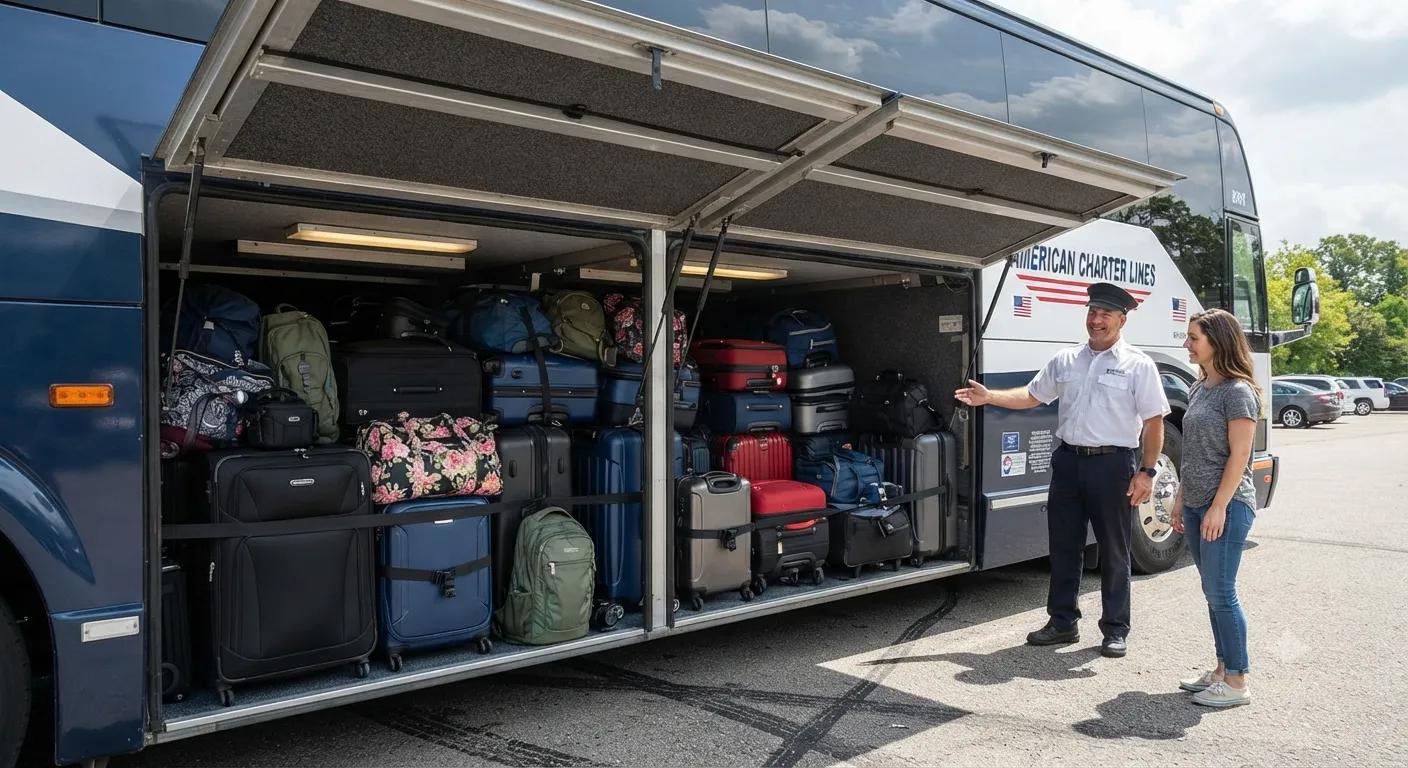
Charter Bus Luggage Capacity: How to Pack for Group Travel
Packing for a group trip requires more planning than simply deciding what to put in your suitcase. When dozens of passengers share one vehicle, everyone’s luggage needs to fit within the available storage space while essential belongings remain easy to access. Understanding charter bus luggage capacity and storage before departure can help group organizers choose the right vehicle, communicate packing expectations, and prevent unnecessary delays when it is time to load the bus.

Understanding Charter Bus Luggage Capacity
Charter bus luggage capacity varies depending on the vehicle's size, model, passenger capacity, and storage configuration. Full-size motorcoaches generally have large compartments beneath the passenger cabin, while smaller buses may offer considerably less dedicated luggage space.
A large motorcoach can accommodate substantial luggage for a full group, but that does not mean every passenger can bring unlimited bags. Storage space is shared, and oversized luggage can use considerably more room than standard suitcases.
The length and purpose of the trip also matter. A group traveling for a few hours may only bring backpacks and small personal bags, while passengers going on a week-long vacation may arrive with full-size suitcases, additional clothing, and other travel equipment.
How Many Bags Should Each Traveler Bring?
There is no universal luggage allowance for every charter bus. The appropriate amount depends on the vehicle and the group's overall storage requirements.
Instead of giving passengers a rigid number without knowing the vehicle, organizers should communicate realistic packing expectations. Travelers should consider what they actually need for the trip and avoid bringing unnecessary oversized luggage.
For a weekend journey, one main suitcase and a smaller personal bag may be sufficient for many travelers. A longer vacation can require additional clothing and supplies, while a sports or event group may have specialized equipment that changes the storage calculation completely.
The important factor is not simply the number of bags but the total volume they occupy.
Why Bus Size Matters
Choosing a bus based only on passenger count can create storage problems. A group may comfortably fit in a smaller vehicle based on seating capacity but require a larger coach because everyone is bringing substantial luggage.
Full-size motorcoaches typically have extensive undercarriage storage. Smaller charter buses and minibuses may have more limited cargo areas, making them better suited to day trips or groups traveling with lighter belongings.
When requesting a quote, provide both the number of passengers and an estimate of the luggage they expect to bring. This gives the transportation provider a clearer picture of the vehicle requirements.
Pack a Separate Personal Bag
One of the easiest ways to make group travel more convenient is to separate items needed during the journey from luggage that can remain stored underneath the bus.
A small personal bag can hold a phone, wallet, identification, medications, headphones, chargers, snacks, travel documents, and other essentials. These items are much easier to access when they remain with the passenger.
Large storage compartments generally are not intended to be accessed while the bus is traveling. Keeping necessities inside the cabin therefore reduces inconvenience and prevents passengers from needing to retrieve their main luggage during the journey.
Choose Luggage That Uses Space Efficiently
The type of luggage passengers bring can affect how efficiently the storage compartment is used. Standard rectangular suitcases can generally be arranged more predictably than unusually shaped bags.
Soft-sided luggage and duffel bags can sometimes be useful because they can fit into gaps around larger pieces. However, travelers should still avoid overpacking bags to the point that they become excessively bulky or difficult to handle.
When several people are traveling together, consolidating belongings where practical can also reduce the total number of individual pieces that need to be loaded.
Packing for Different Types of Group Trips
Every group trip has a different luggage profile. A corporate group traveling to a one-day conference may primarily have laptop bags, briefcases, and small personal items. A wedding group may bring formal clothing, garment bags, gifts, and overnight luggage.
Sports teams often have much greater storage requirements because players may travel with uniforms, equipment bags, helmets, protective gear, and other supplies. School groups can also have backpacks, musical instruments, activity supplies, or educational equipment.
Understanding the specific nature of the trip allows organizers to estimate storage requirements more accurately.
Wedding Travel and Formal Clothing
Wedding transportation often involves passengers carrying clothing that requires extra care. Formal dresses, suits, tuxedos, and other event clothing may be transported in garment bags alongside ordinary luggage.
Because garment bags can have unusual dimensions, organizers should mention them when discussing luggage with the transportation provider. Wedding decorations, gift bags, and other event supplies may also require additional space.
Keeping delicate or valuable items organized separately can make loading and unloading easier while reducing the chance that important belongings become buried beneath other luggage.
Sports Equipment and Oversized Items
Sports equipment deserves special attention because it can consume storage space quickly. Golf bags, hockey equipment, large athletic bags, bicycles, and other bulky items may require considerably more room than ordinary suitcases.
Groups should communicate these requirements before booking. Providing approximate dimensions or a description of the equipment gives the transportation company a better opportunity to determine whether the selected vehicle can accommodate everything.
The same principle applies to musical instruments, event displays, folding tables, large coolers, and other unusual items.
Label Every Bag Clearly
When dozens of suitcases are loaded into one storage compartment, it can be difficult to identify individual belongings. Clear luggage tags can make a major difference.
Travelers should include their name and appropriate contact information on each bag. A distinctive luggage strap or other visual identifier can also make bags easier to recognize.
This becomes especially useful on multi-stop trips where some passengers may unload their belongings before the rest of the group reaches its final destination.
Consider the Trip Duration
The longer the journey, the more luggage passengers are likely to bring. A short city transfer may require very little storage, while a multi-day road trip can involve several changes of clothing, toiletries, shoes, jackets, and activity-specific equipment.
Before the trip, organizers should consider the number of nights travelers will be away and the types of activities planned. A winter vacation, for example, may require bulkier clothing than a summer weekend getaway.
Taking these factors into account can provide a more realistic estimate of total luggage volume.
Communicate With the Transportation Provider
One of the most important steps in luggage planning is communicating honestly with the charter company. Tell the provider how many passengers are traveling, how long the trip will last, how much luggage you expect, and whether the group has oversized or specialized equipment.
The provider can then help determine whether the selected bus has an appropriate amount of storage. Asking these questions before the trip is much easier than trying to solve a storage problem at departure.
It is also worth confirming whether the operator has specific luggage restrictions or requirements. Policies can vary between companies and vehicle types.
What Happens When Luggage Does Not Fit?
If a group arrives with considerably more luggage than expected, the transportation provider may need to reorganize the available space or determine another solution. Depending on the circumstances, smaller items may be rearranged to accommodate larger pieces, but passenger safety and clear access areas must remain priorities.
In cases of significant overflow, an alternative vehicle or additional transportation may be necessary. Such situations can cause delays and additional expenses, which is why accurate luggage planning is important.
Final Thoughts
Charter bus luggage capacity depends on much more than the number of seats. Vehicle size, storage configuration, passenger count, trip duration, luggage dimensions, and specialized equipment all affect how much can be transported comfortably.
The best way to prepare is to estimate your group's actual luggage needs before booking. Encourage travelers to pack efficiently, keep essential items in a personal cabin bag, label every suitcase, and communicate oversized belongings in advance.
With thoughtful preparation and the right vehicle, groups can make better use of available storage while keeping the passenger cabin comfortable, organized, and ready for the journey