

Charter Bus Accident Guide: What Passengers Need to Know
Charter buses are a convenient way to transport groups for school trips, corporate events, vacations, weddings, sporting events, and long-distance travel. Although charter bus companies follow safety procedures and professional drivers are trained to operate large passenger vehicles, accidents can still happen because of traffic conditions, weather, mechanical problems, driver errors, or the actions of other motorists. Knowing what to do after an accident can help passengers protect their safety and understand the steps they may need to take afterward. For more information about immediate steps and important considerations, passengers can also review this guide to what to do after a charter bus accident.

Stay Calm and Assess the Situation
The first priority after any charter bus accident is personal safety. An accident can be frightening and confusing, particularly when many passengers are involved. Try to remain calm and listen carefully to instructions from the driver, emergency responders, or other authorities at the scene.
If you are physically able to do so, assess yourself for injuries before attempting to move. Some injuries may not be immediately obvious because adrenaline can temporarily mask pain. Passengers should avoid unnecessary movement if they believe they have suffered a serious injury, particularly an injury involving the neck, back, or head.
If the bus is in a dangerous position, such as in active traffic or near fire or leaking fuel, passengers may need to evacuate when it is safe to do so. Follow the driver's instructions and move to a safe location away from the roadway whenever possible.
Contact Emergency Services
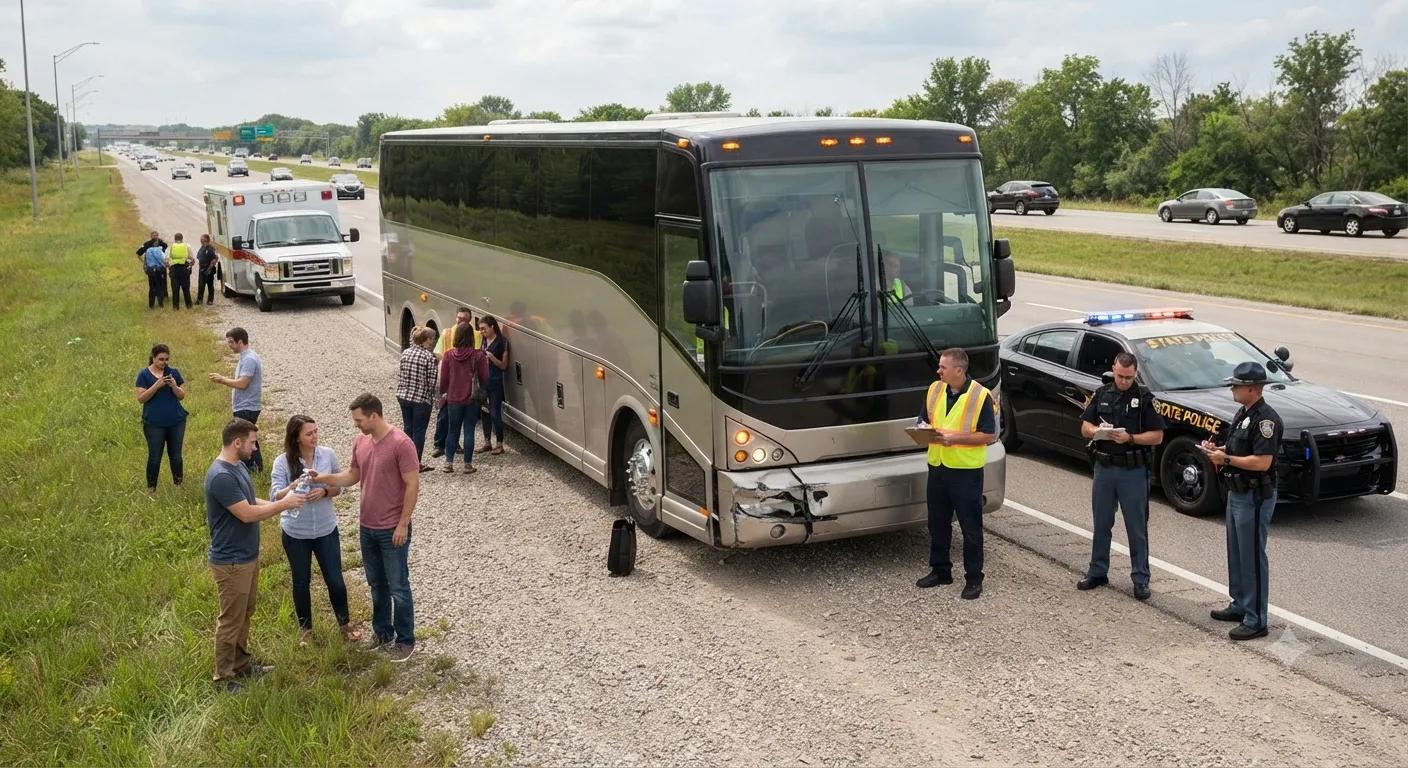
Emergency medical assistance should be requested when anyone has been injured or when the accident creates a significant safety hazard. Police and emergency medical personnel can assess the scene, provide treatment, document what happened, and help manage traffic.
Passengers should cooperate with emergency responders and provide accurate information about what they experienced. If you witnessed how the accident occurred, explain what you personally saw rather than making assumptions about who was responsible.
Emergency responders may also document injuries and other conditions at the scene. Their records can become important later if passengers need to explain what happened to an insurance company, attorney, medical provider, or other party.
Seek Medical Attention for Injuries
Passengers who are injured should receive appropriate medical attention. Serious injuries are not always immediately apparent following a collision. Symptoms associated with some head, neck, soft-tissue, or internal injuries may develop later.
Even when an injury initially seems minor, passengers should pay attention to changes in their condition. Anyone experiencing significant pain, dizziness, confusion, difficulty breathing, bleeding, or other concerning symptoms should seek prompt medical care.
Medical records can also provide an objective record of an injury and the treatment received. Keep copies of medical documents, bills, prescriptions, and other relevant records whenever possible.
Document the Accident Scene
When it is safe and practical, passengers can document information about the accident. Photographs or videos may help preserve details that could otherwise be forgotten, including the condition of the bus, surrounding vehicles, road conditions, visible damage, traffic signs, and the general location of the collision.
Passengers should never put themselves in danger simply to obtain photographs. If the scene is unsafe, allow emergency personnel to handle the situation and document it when conditions permit.
It can also be helpful to write down what you remember as soon as possible. Details such as the approximate time of the accident, location, weather conditions, direction of travel, unusual events before the collision, and what happened immediately afterward may become harder to remember as time passes.
Collect Relevant Information
Passengers may want to obtain basic information about the charter bus and the companies involved. Depending on the circumstances, this can include the name of the charter bus company, bus number, driver's name, trip organizer, insurance information, and details about other vehicles involved.
If other passengers witnessed important events, their names and contact information may also be useful. Witness accounts can help establish what happened when memories differ or when the circumstances of an accident are disputed.
Passengers should avoid arguing with drivers, other motorists, or witnesses about fault at the scene. The purpose of collecting information is to preserve facts, not to determine responsibility personally.
Report the Accident to the Appropriate Parties
The charter bus company and trip organizer should generally be informed about the accident. If you purchased transportation directly or were traveling as part of an organized event, keep records of your booking, tickets, receipts, correspondence, and other trip-related documents.
Passengers may also receive follow-up communications from insurance representatives or other parties. Before providing detailed statements about an injury or agreeing to a settlement, it can be useful to understand what information is being requested and why.
If an accident resulted in significant injuries, property loss, or other serious consequences, passengers may wish to consult a qualified legal professional who handles transportation or personal injury matters. A lawyer can explain applicable rights and procedures based on the specific circumstances and jurisdiction.
Keep Track of Accident-Related Expenses
An accident can result in expenses beyond immediate medical treatment. Depending on the situation, passengers may experience costs associated with transportation, medication, follow-up appointments, damaged personal belongings, missed work, or changes to travel arrangements.
Keep receipts and other documentation for expenses connected to the accident. Maintaining organized records can make it easier to explain the financial impact of the incident if reimbursement or an insurance claim becomes relevant.
Passengers should also preserve photographs of damaged belongings and keep copies of relevant correspondence. A simple timeline describing medical visits, communications, expenses, and other developments can help maintain an accurate record.
Understand That Every Accident Is Different
There is no single procedure that applies perfectly to every charter bus accident. A collision involving another vehicle may involve different issues than an accident caused by road conditions, mechanical failure, or another circumstance. The number of passengers, severity of injuries, location of the accident, and parties involved can also affect what happens afterward.
For that reason, passengers should focus first on immediate safety and medical needs, followed by preserving accurate information about the incident. Avoid making assumptions about legal responsibility before the available facts have been properly reviewed.
Protect Your Safety After a Charter Bus Accident
A charter bus accident can be an overwhelming experience, especially when multiple passengers are involved. Knowing the basic steps to take can make the situation easier to manage. Get to a safe location when possible, seek medical attention for injuries, cooperate with emergency responders, document relevant facts, and preserve important records.
Passengers can also learn more about charter bus accident procedures to better understand the practical considerations that may arise after a collision. Taking organized, safety-focused steps can help passengers respond appropriately while ensuring that important information is not lost.
Ultimately, the most important consideration after a charter bus accident is the well-being of everyone involved. Once immediate safety and medical concerns have been addressed, keeping accurate records and obtaining appropriate professional guidance can help passengers navigate the next stages with greater clarity.