

Best Road Trip Snacks for Long Charter Bus Rides
A long charter bus ride is easier to enjoy when passengers have the right food packed for the journey. Choosing practical road trip snacks for long bus rides can help everyone stay comfortable and energized between meals without dealing with excessive crumbs, spills, or strong food odors. Whether your group is traveling for a vacation, sporting event, school trip, corporate outing, family reunion, or special event, preparing snacks in advance can make the ride more enjoyable. For additional ideas, check this guide to road trip snacks for long bus rides.

Why Pack Snacks for a Long Charter Bus Ride?
Long-distance group travel can involve several hours on the road, and meal stops may not always happen exactly when passengers become hungry. Traffic, weather, construction, and itinerary changes can all affect the timing of planned stops.
Having snacks available gives passengers an easy option between meals. However, eating on a charter bus requires some consideration because the vehicle is a shared space.
The best snacks are easy to carry, simple to eat from a seat, and unlikely to create a mess. They should also be appropriate for the length of the journey and the needs of the people traveling with you.
What Makes a Good Road Trip Snack?
A good charter bus snack should be convenient, portable, and easy to handle. Foods that require plates, forks, knives, or extensive preparation are usually less practical inside a moving vehicle.
It is also smart to consider how much a snack crumbles, melts, spills, or smells. Low-mess foods can help keep seats and surrounding areas cleaner while minimizing inconvenience for other passengers.
Nutrition is another consideration. Snacks containing protein, fiber, whole grains, fruit, or healthy fats can help passengers feel satisfied between meals. A balanced snack selection is generally more useful than filling the entire snack bag with sugary treats.
Best Healthy Snacks for Long Charter Bus Rides
There are plenty of nutritious foods that travel well. Trail mix is a classic road-trip option because it can combine nuts, seeds, and dried fruit in a compact package. Portioning it into small containers before departure makes it easier to manage.
Whole fruits such as apples, bananas, oranges, and grapes are also convenient. Choose fruits that travel well and do not require cutting or extensive preparation.
Protein bars and granola bars can provide a quick snack without taking up much space. Look for options that are not excessively crumbly to minimize cleanup.
Whole-grain crackers, roasted chickpeas, dried fruit, pretzels, and individually packaged nuts can add variety to a travel snack bag.
For groups, always consider food allergies before sharing snacks. Checking ingredient labels is particularly important when common allergens such as nuts, dairy, wheat, or soy are involved.
Best Low-Mess Snacks for Bus Travel
Nobody wants a long charter bus ride to end with food crumbs covering the seats. Choosing low-mess snacks can make a significant difference.
Pretzels, crackers, dried fruit, granola bars, popcorn in resealable containers, and individually packaged snacks are relatively easy to manage. Small portions can also prevent passengers from accidentally spilling a large bag.
Avoid foods with excessive sauces, sticky fillings, loose powdered toppings, or excessive grease. Flaky pastries can also create a surprising amount of debris.
Resealable bags and containers are useful for keeping snacks fresh while preventing accidental spills. Passengers can take a small portion and close the container instead of leaving food exposed.
Fresh Fruit and Vegetable Options
Fresh produce can be an excellent addition to a charter bus snack bag. Apples, bananas, grapes, baby carrots, celery sticks, and small cucumbers can provide refreshing alternatives to packaged snacks.
For longer trips, fruit and vegetables that require refrigeration should be transported in an insulated cooler with appropriate ice packs. This is especially important when the journey takes place during warm weather.
Choose produce that is easy to eat while seated. Foods requiring extensive peeling, cutting, or preparation can be less convenient inside the bus.
Protein-Rich Snacks for Long Trips
Protein can help make snacks more filling. Travelers can consider individually packaged nuts, seeds, protein bars, roasted chickpeas, jerky, or cheese portions when appropriate storage is available.
Nuts and seeds are particularly convenient because they require no refrigeration and can be portioned easily. However, they may not be suitable for groups with nut allergies.
For sports teams or active groups, protein-rich snacks can be paired with carbohydrate-containing foods such as fruit, whole-grain crackers, or granola bars.
What Drinks Should You Bring?
Hydration is an important part of preparing for a long bus ride. Water should be the primary beverage for most passengers.
Reusable water bottles can reduce waste, while sealed bottled water may be more convenient for large groups. On hot-weather journeys, electrolyte beverages may also be useful.
Passengers should consider the number and timing of restroom stops when planning how much they drink. Excessive consumption of caffeinated or sugary beverages may be inconvenient during a long journey.
Always check the charter company's rules before bringing large quantities of food and beverages onboard.
Road Trip Snacks for Kids
Children often appreciate having several snack options during a long journey. Familiar foods can help prevent hunger-related frustration and make the ride more comfortable.
Good options include dry cereal, pretzels, crackers, fruit snacks, applesauce pouches, granola bars, bananas, and other individually packaged foods.
Parents should consider packing an extra snack in case traffic or unexpected delays extend the journey.
For school trips and youth groups, organizers should identify food allergies and dietary restrictions before purchasing shared snacks. Providing suitable alternatives can help ensure every passenger has something safe to eat.
Snacks for Sports Teams
Sports teams may need snacks that provide carbohydrates, protein, and hydration before or after athletic activities.
Bananas, trail mix, protein bars, whole-grain crackers, dried fruit, and other portable foods can work well. Water should remain readily available throughout the trip.
If the group is traveling directly to a game or competition, avoid overly heavy or greasy foods that could leave athletes feeling uncomfortable before physical activity.
For tournament travel, organizers can coordinate snacks with planned meals and rest stops to ensure athletes have appropriate food throughout the day.
Snacks for Family and Vacation Groups
Family road trips often include passengers with different preferences and ages. Instead of purchasing only one type of snack, create a small variety.
Adults may prefer trail mix, nuts, fruit, or protein bars, while children may want crackers, granola bars, or fruit snacks.
A shared snack supply can be divided into individual portions before departure. This makes distribution easier and reduces the chance of spills.
Families should also pack plenty of water and a few extra snacks for unexpected delays.
Foods to Avoid on a Charter Bus
Some foods are better enjoyed during a rest stop rather than inside the passenger cabin.
Strong-smelling foods such as fish, heavily seasoned meals, and pungent cheeses can create unpleasant odors in an enclosed space. Saucy and greasy foods can also cause spills.
Foods that melt easily, such as chocolate and heavily frosted treats, may become messy during warm-weather travel.
Perishable foods should be kept at appropriate temperatures. If you are bringing cheese, yogurt, sandwiches, or other refrigerated foods, use an insulated cooler with sufficient ice packs.
Alcohol should only be brought onboard when the transportation provider has confirmed that it is permitted.
How to Pack Snacks for a Long Bus Ride
Organize your snacks before leaving home. Place dry foods in resealable bags or containers and keep them somewhere passengers can easily access.
If you are bringing refrigerated foods, store them separately in a cooler. Avoid placing perishable foods in a regular backpack where they can remain at unsafe temperatures for several hours.
Individual portions are especially useful for large groups. They reduce the need to pass large packages between rows and help keep food organized.
Don't forget trash bags. Keeping several small bags accessible encourages passengers to dispose of wrappers, bottles, and food waste during the journey.
How Many Snacks Should You Pack?
The right amount depends on the length of the trip and the availability of meal stops.
For a six- to eight-hour journey, passengers may want two or three snacks in addition to planned meals. Shorter trips may only require one snack, while overnight journeys require more detailed planning.
For group trips, it is smart to pack a small amount of extra food in case traffic, weather, or itinerary changes delay the next meal.
Sample Charter Bus Snack Bag
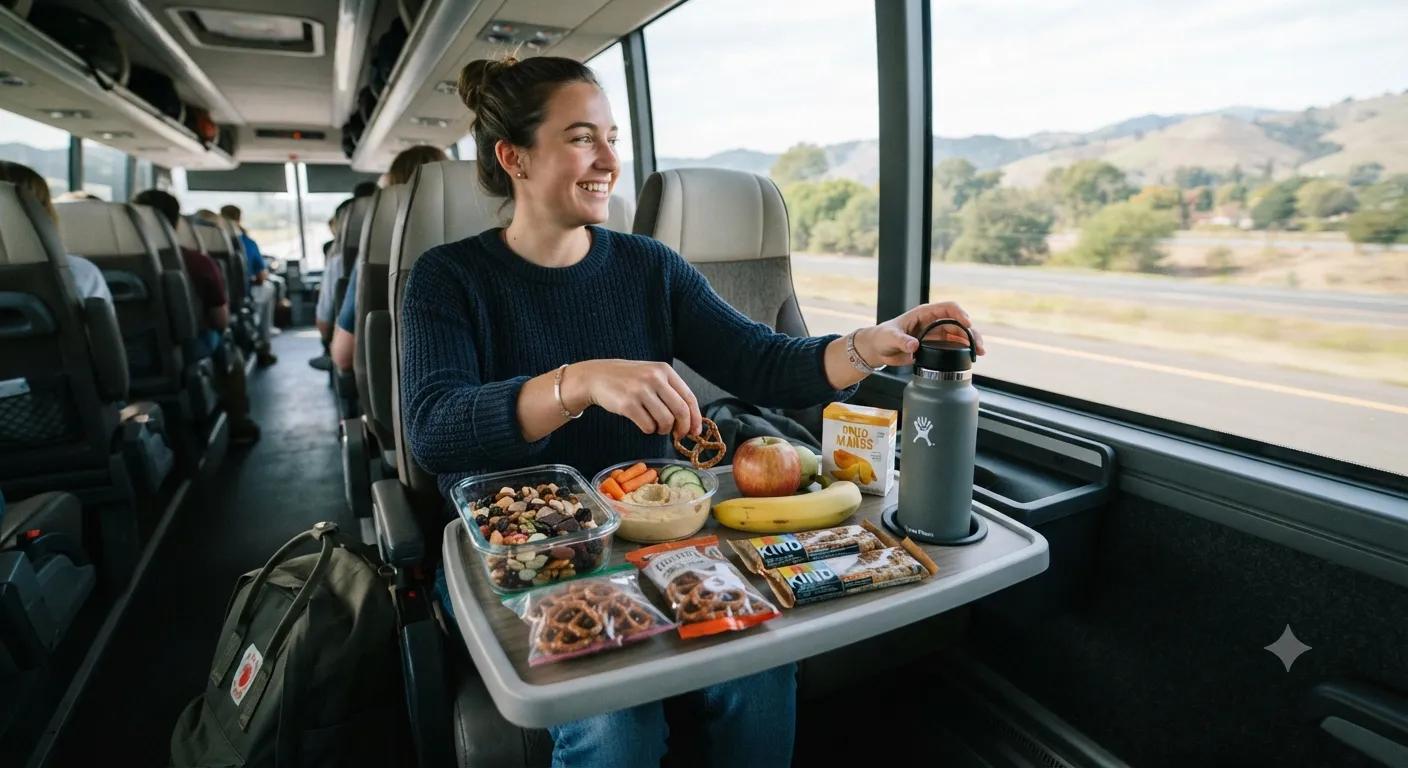
A simple snack bag for a long journey could include a water bottle, an apple or banana, a protein or granola bar, a small portion of trail mix, whole-grain crackers, and dried fruit.
For children, add familiar snacks such as dry cereal or fruit snacks. Sports teams can include additional protein- and carbohydrate-rich options.
This combination offers variety while remaining relatively easy to store and eat on the bus.
Final Tips for Choosing Road Trip Snacks
The best road trip snacks for long charter bus rides should be convenient, nutritious, portable, and easy to eat without creating a mess.
Before packing, consider the trip length, weather, passenger ages, dietary restrictions, meal schedule, and available storage. Choose foods that can be comfortably eaten from a seat and avoid items that are excessively messy, strongly scented, or difficult to keep fresh.
Most importantly, check your charter bus provider's food and beverage policies before departure. With thoughtful preparation, your group can enjoy a cleaner, more comfortable, and better-fueled journey from the first mile to the final destination.