

Benefits of Charter Bus Rentals for Trade Shows and Industry
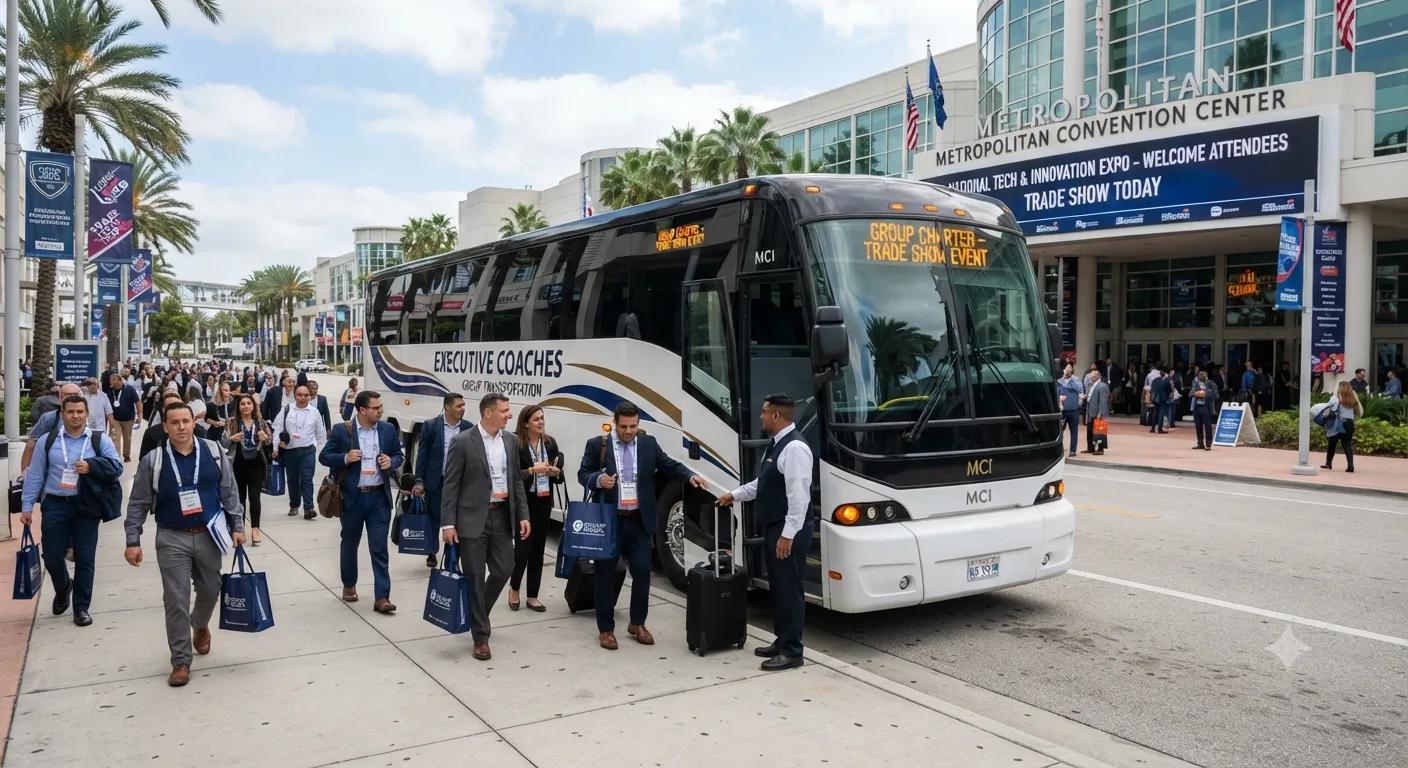
Trade shows and industry exhibitions provide businesses with valuable opportunities to showcase products, connect with prospective customers, build professional relationships, and strengthen their market presence. However, organizing transportation for employees, exhibitors, clients, and attendees can become complicated when several people need to reach the same venue at specific times. Choosing reliable charter bus transportation for trade shows and exhibitions helps businesses coordinate group travel, simplify event logistics, and provide a more comfortable experience for participants. With appropriate planning, charter bus rentals can support smoother arrivals, more efficient scheduling, and better use of event resources.

Simplifying Transportation for Large Groups
One of the primary advantages of charter bus rentals is the ability to transport multiple people together. Trade shows often attract employees from different departments, sales representatives, company executives, and invited business partners. Arranging separate vehicles for every participant can make coordination difficult and increase the chances of late arrivals.
Charter bus transportation brings group members together under one planned schedule. Instead of managing several rental cars or individual rideshare bookings, organizers can coordinate transportation through a central arrangement. This approach makes it easier to communicate departure times, confirm passenger numbers, and organize arrivals at the exhibition venue.
Traveling together can also encourage collaboration among employees. Team members can review presentations, discuss product demonstrations, and prepare for meetings during the journey, making travel time more productive.
Improving Punctuality and Event Coordination
Time management is especially important during trade shows and industry exhibitions. Exhibitors may need to arrive early for booth setup, equipment checks, and promotional preparations, while attendees may have scheduled seminars, product launches, and business meetings.
When participants travel independently, organizers have limited control over arrival times. Traffic congestion, parking difficulties, and unfamiliar routes can create delays that affect the day's schedule.
A charter bus arrangement allows planners to establish designated pickup points and planned departure times. By coordinating routes and building additional travel time into the itinerary, businesses can help participants reach the venue with fewer transportation-related complications.
For multi-day exhibitions, recurring shuttle services can provide convenient connections between hotels and convention centers. The schedule should reflect venue opening hours, expected passenger demand, road conditions, and the time required for each journey.
Reducing Parking and Traffic Challenges
Large exhibitions can place considerable pressure on parking facilities and nearby roads. Convention centers may have limited parking capacity, and spaces located farther away can require additional walking time. Participants who drive separately may also encounter different parking fees and arrival procedures.
Charter bus rentals reduce the number of individual vehicles required to transport a group. Organizers can arrange designated drop-off and pickup locations, helping passengers reach the exhibition entrance without searching for separate parking spaces.
Before confirming transportation, planners should check the venue's rules for charter buses, including loading zones, parking permissions, vehicle height restrictions, and access requirements. These details help prevent unexpected complications on the event day.
Reducing the number of vehicles used for group travel may also contribute to more efficient traffic management around busy event locations.
Enhancing Comfort for Exhibitors and Attendees
Trade show participants often spend long hours attending presentations, speaking with customers, demonstrating products, and networking with industry professionals. Convenient transportation can help make the overall experience less stressful.
Depending on the selected vehicle, charter buses may provide comfortable seating, climate control, overhead storage, and additional amenities that make group journeys more convenient. Larger motorcoaches may also offer onboard restrooms, which can be useful for longer-distance travel.
Comfort is especially important when participants travel between hotels, airports, and exhibition centers over several days. A suitable vehicle gives attendees a coordinated travel arrangement and allows them to focus on event activities rather than navigating unfamiliar roads.
Organizers should discuss seating capacity, luggage requirements, accessibility needs, and desired amenities with the transportation provider before selecting a vehicle.
Supporting a Professional Corporate Image
The transportation experience can influence how employees, invited clients, and business partners perceive an event. Companies that organize clear pickup arrangements and coordinated travel demonstrate attention to detail and consideration for their guests.
For businesses hosting prospective customers or VIP attendees, charter bus transportation can help create an organized arrival experience. Passengers receive clear instructions and travel according to a planned itinerary, reducing confusion about routes, parking, and arrival locations.
Group transportation can also support company-wide coordination. Employees attending the same exhibition can arrive together, discuss event objectives, and prepare for scheduled activities before reaching the venue.
Although transportation is only one aspect of a successful trade show, well-managed arrangements can contribute to a positive overall impression.
Managing Trade Show Transportation Costs
Transportation expenses can increase quickly when businesses rely on multiple rental cars, separate rideshare bookings, individual parking payments, and repeated transfers. Charter bus rentals offer an alternative that allows organizers to evaluate group transportation costs within a coordinated service arrangement.
The total cost depends on several factors, including passenger capacity, travel distance, service hours, vehicle type, parking, tolls, and the number of trips required. Comparing quotations with the same itinerary and service requirements helps businesses understand which option provides the best value.
To manage expenses, organizers should estimate passenger numbers carefully and select a vehicle that suits the group's actual requirements. Combining passengers from nearby hotels may also reduce unnecessary trips when the arrangement remains convenient for everyone.
For multi-day exhibitions, planners should compare scheduled transfers with retaining a vehicle for recurring service. Reviewing waiting time, additional mileage, overtime charges, and other potential fees can help avoid unexpected expenses.
Providing Flexible Transportation Options
Different trade shows have different transportation requirements. A small company delegation attending a regional exhibition may need a minibus, while a large team traveling to a national industry conference may require a full-size charter bus.
Minibuses can be suitable for smaller groups and shorter transfers. Larger buses may accommodate more passengers and additional luggage, depending on the vehicle configuration. When selecting a vehicle, organizers should consider both passenger capacity and storage requirements, particularly if exhibitors are carrying presentation materials or product samples.
Charter transportation can also support different schedules for exhibitors, attendees, executives, and event staff. For example, a dedicated early departure may be necessary for booth preparation, while general attendees may use shuttle services scheduled around public exhibition hours.
This flexibility allows businesses to tailor transportation arrangements to their priorities rather than relying on one schedule for every participant.
Improving Airport and Hotel Transfers
Many trade shows attract visitors from outside the host city. Coordinating airport and hotel transfers can therefore become an important part of the transportation plan.
Charter buses can provide group transfers from designated airport pickup points to hotels or exhibition venues. Organizers should consider flight arrival windows, baggage collection time, passenger counts, and the distance between locations when arranging these services.
For participants staying at several hotels, planners can compare individual pickups with a central collection point. The most suitable option depends on the group's schedule, hotel locations, and the time available before the exhibition begins.
Clear pickup instructions and confirmed meeting points help visitors unfamiliar with the area navigate their travel arrangements more easily.
Conclusion
Charter bus rentals offer several benefits for trade shows and industry exhibitions, including coordinated group travel, improved scheduling, reduced parking concerns, greater passenger convenience, and more predictable transportation planning. They can also support a professional corporate image and help businesses manage travel arrangements for employees, exhibitors, clients, and attendees.
Successful transportation begins with understanding the group's requirements, selecting an appropriate vehicle, planning realistic routes, and confirming costs before booking. With advance preparation and clear communication, businesses can reduce logistical challenges and create a smoother trade show experience while keeping attention focused on networking, product presentations, and valuable business opportunities.