

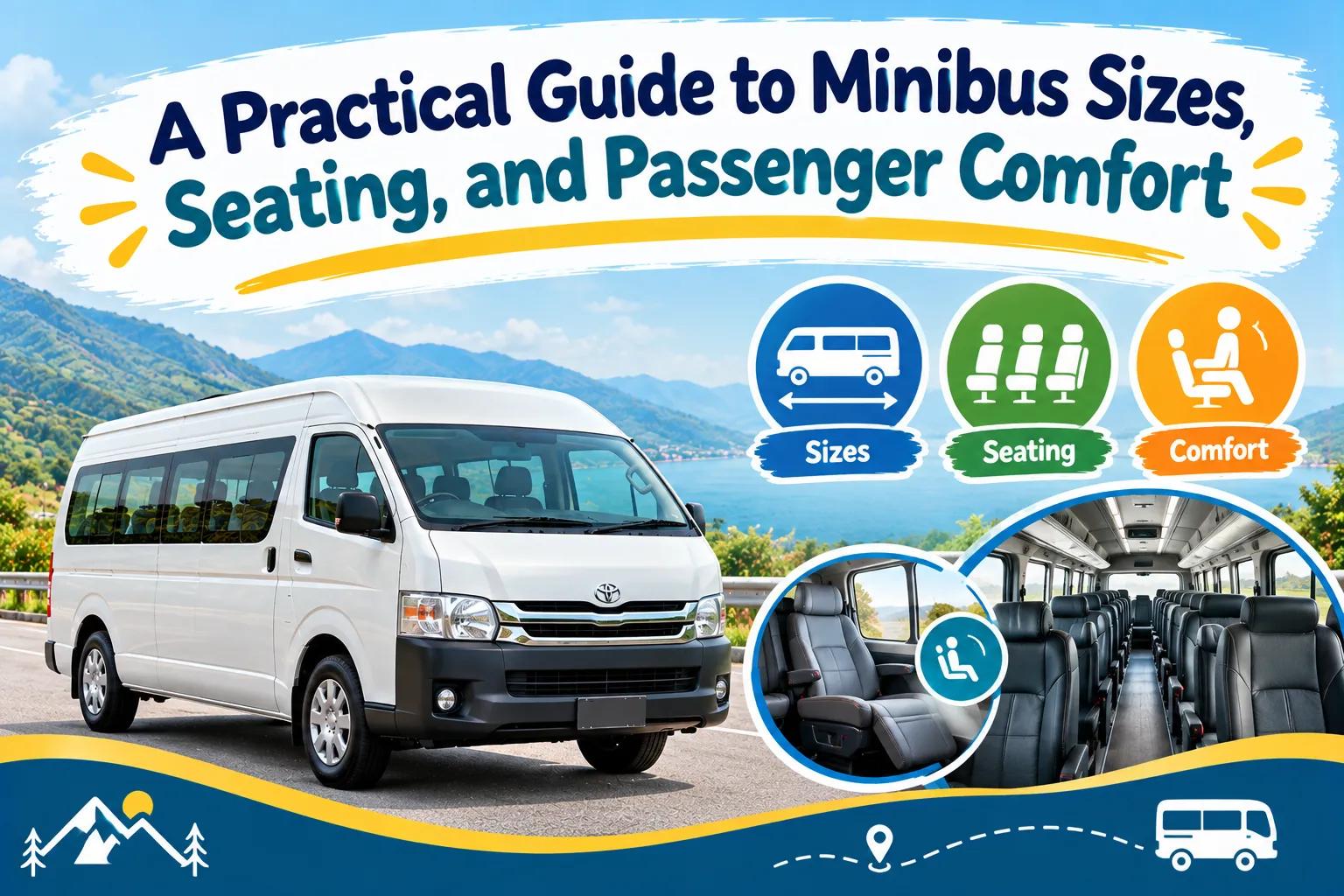
A Practical Guide to Minibus Sizes, Seating, and Passenger
Choosing the right minibus for group transportation involves balancing passenger capacity, seating arrangements, comfort, and available storage. Whether you are planning a corporate outing, airport transfer, wedding shuttle, school trip, or family excursion, the right vehicle can make your journey more convenient and organized. Understanding the different minibus seat capacities and passenger configurations is a useful first step when comparing rental options for your group.

Minibuses are popular because they offer a practical alternative to arranging multiple cars or booking a full-size charter bus for a smaller party. However, not every minibus provides the same seating capacity or comfort features. Considering your group's size, travel distance, luggage requirements, and individual needs will help you choose a suitable vehicle.
Understanding Different Minibus Sizes
Minibuses are available in various sizes, with passenger capacity depending on the vehicle's model, design, and seating configuration. Smaller passenger vehicles may accommodate approximately 8 to 12 passengers, while medium-sized minibuses often serve groups of around 13 to 20 people. Larger models can accommodate approximately 21 to 30 passengers or more, depending on the specific vehicle.
These figures are general guidelines rather than fixed standards. Some vehicles have fewer seats to provide additional room for luggage, accessibility equipment, or more spacious seating. Before making a reservation, confirm the exact number of passenger seats available.
For small family outings and executive transfers, a compact vehicle may be sufficient. Corporate groups, wedding parties, and community organizations may benefit from a medium-sized minibus, while larger groups should compare high-capacity minibuses with full-size charter buses.
Selecting the correct size helps avoid overcrowding and unnecessary rental expenses.
Choosing the Right Seating Configuration
Seating configuration influences both passenger capacity and the overall travel experience. Some minibuses use a two-by-two arrangement, with two seats on each side of a central aisle. This layout can provide convenient access to seats and a comfortable arrangement for many group trips.
Other vehicles use different configurations to accommodate more passengers or provide additional space for particular requirements. The best arrangement depends on the vehicle's design and the purpose of your journey.
When evaluating seating, consider how frequently passengers will enter and exit the vehicle. For shuttle services involving multiple stops, convenient aisle access and straightforward boarding can make the journey easier to manage.
You should also confirm whether the advertised capacity includes the driver or refers only to passenger seats. This small detail can prevent confusion when comparing different rental options.
Prioritizing Passenger Comfort
Passenger comfort becomes increasingly important as travel time increases. A minibus that works well for a short airport transfer may not provide the same experience on a journey lasting several hours.
Consider the amount of legroom, seat width, back support, and available headroom. These features influence how comfortably passengers can sit throughout the trip. Air conditioning and heating are also valuable, particularly when traveling in changing weather conditions.
Some minibuses offer reclining seats, charging facilities, overhead storage, or other amenities. However, features vary by model and provider, so confirm what is included with your specific rental.
For longer journeys, it may be worth choosing a vehicle with a more spacious interior rather than selecting the smallest available option. Comfortable passengers are more likely to arrive feeling ready for their planned activities.
Evaluating Luggage and Storage Capacity
Seating capacity alone does not determine whether a minibus is suitable. Your group must also have sufficient room for luggage, equipment, and personal belongings.
Airport transfers often involve suitcases and carry-on bags, while sports teams may need space for uniforms, equipment bags, and supplies. Groups attending overnight events may also carry additional belongings.
Before booking, estimate the quantity and size of the luggage your passengers will bring. Discuss these requirements with the transportation provider and ask about dedicated storage compartments, overhead racks, or other available space.
If the group has substantial luggage, a larger minibus or charter bus may be more appropriate. A vehicle that technically accommodates everyone but cannot safely store their belongings is unlikely to provide a satisfactory travel experience.
Planning storage requirements in advance helps maintain a comfortable passenger area and reduces the likelihood of last-minute changes.
Matching Minibus Size to Your Trip
The purpose of your journey can help determine the most appropriate minibus size. Different events create different transportation requirements, so consider the complete travel plan before reserving a vehicle.
For corporate transportation, a compact or medium-sized minibus can carry employees and clients between offices, hotels, conference centers, and meeting venues. Choosing the right capacity helps coordinate arrivals without paying for unnecessary seats.
For weddings and private celebrations, minibuses can transport guests between hotels, ceremony locations, reception venues, and parking areas. The number of guests requiring transportation and the frequency of shuttle trips should influence your choice.
School outings and community events require careful attention to passenger numbers, supervision, and applicable safety requirements. Sports teams may need additional storage for equipment alongside sufficient seating for players and staff.
For airport transfers, consider both the number of passengers and the amount of luggage they will carry. These details help determine whether a compact minibus is sufficient or whether a larger vehicle is necessary.
Comparing Minibuses with Full-Size Charter Buses
When your group approaches the upper capacity of a minibus, comparing it with a full-size charter bus can help you make a better decision.
Minibuses are often suitable for small and medium-sized groups, local transfers, shuttle services, and shorter excursions. Their smaller dimensions may also make them convenient for certain destinations with limited parking or restricted access, depending on the vehicle.
Full-size charter buses generally accommodate larger groups and may provide additional luggage storage and amenities for extended journeys. They can be a practical choice for large corporate events, school trips, sports tournaments, and organized tours.
The best option depends on more than passenger numbers. Consider the total rental cost, luggage requirements, journey duration, available amenities, and route accessibility. A larger vehicle may offer better value for a large group, while a minibus can be more economical when fewer people are traveling.
Planning Your Minibus Rental Budget
Minibus rental prices can vary according to vehicle size, travel distance, rental duration, location, date, and availability. Comparing quotes helps you understand which option offers the best value for your requirements.
Ask the provider whether the price includes the driver, fuel, tolls, parking, waiting time, and other applicable expenses. You should also review cancellation terms and understand how changes to your itinerary or passenger count may affect the cost.
Booking early gives you more time to compare vehicles and confirm availability, particularly during busy periods such as holidays, wedding season, and major sporting events.
When requesting a quote, provide an accurate passenger count, luggage estimate, pickup locations, destination, and expected schedule. Clear information helps the transportation provider recommend a vehicle that suits your group.
Conclusion
Choosing the right minibus requires careful consideration of vehicle size, seating configuration, passenger comfort, luggage space, and travel requirements. A suitable vehicle allows everyone to travel together while making the journey more comfortable and convenient.
Whether you are organizing a corporate outing, wedding shuttle, airport transfer, school excursion, or family trip, confirm the actual passenger capacity and available amenities before booking. Discuss luggage requirements, accessibility needs, and the complete itinerary with your transportation provider to avoid unexpected complications.
With thoughtful planning and the right minibus, you can create a more organized group transportation experience while balancing comfort, convenience, and cost.