

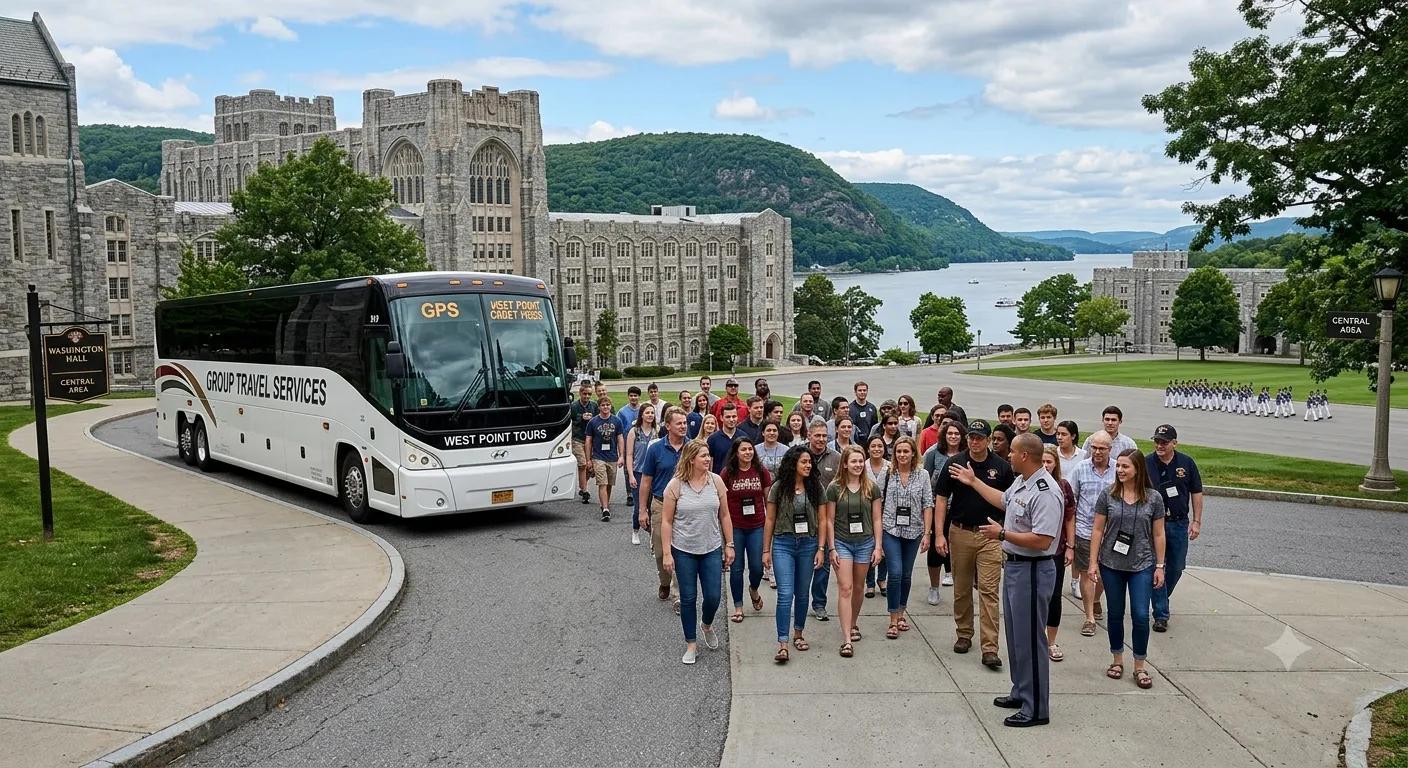
A Guide to Organizing School and Student Group Trips to West
Organizing a school trip to West Point, New York, can give students a valuable opportunity to learn about American military history, leadership, discipline, and the traditions of the United States Military Academy. However, coordinating a successful educational excursion requires careful scheduling, student supervision, and dependable transportation. Arranging charter bus transportation for school trips to West Point can help schools keep students together, simplify travel arrangements, and create a more organized experience for teachers and chaperones.

Located along the Hudson River, West Point is a historically significant destination for students interested in military service, leadership, and American history. Since the academy is part of an active military installation, school organizers must confirm visitor eligibility, tour availability, identification requirements, and entry procedures before finalizing their plans.
With a clear itinerary and suitable transportation, schools can reduce common travel challenges and help students get more educational value from their visit.
Establish the Educational Purpose of the Trip
Before making reservations, determine what students should learn from the experience. A clearly defined educational objective helps teachers select appropriate activities and prepare students for the visit.
History classes may focus on West Point's role in American military history, while leadership programs can examine the academy's emphasis on responsibility, teamwork, and service. Schools organizing career exploration trips may also want students to learn about military education and the academy's academic environment.
Discuss the learning objectives with teachers and administrators, then confirm which visitor activities are available to school groups. Do not assume that all academy facilities are open to the public or included in a standard tour.
Preparing students before departure can make the visit more meaningful. Teachers can introduce relevant historical events, assign research topics, and encourage students to prepare questions for the tour.
Confirm Tour Reservations and Visitor Requirements
The next step is to contact the appropriate official West Point tour or visitor office. Confirm available dates, group capacity, tour duration, meeting arrangements, and any restrictions that apply to school groups.
West Point is an active military installation, so access procedures differ from those at ordinary museums and tourist attractions. Organizers should review the official West Point visitor information page to understand current entry procedures and identification requirements.
Ask whether student names must be submitted in advance, which identification documents are required, and whether special instructions apply to international students or accompanying adults.
Confirm all deadlines before booking transportation. Having an approved tour schedule makes it easier to coordinate the bus departure, arrival time, and return journey.
Choose the Right Charter Bus for Students
Transportation plays an important role in the success of a school excursion. The right vehicle should accommodate students, teachers, chaperones, and any additional staff without exceeding its seating capacity.
A full-size charter bus may be suitable for a large class or multiple classes traveling together. Smaller groups may find a minibus or school bus more practical, depending on the trip's requirements and available services.
When comparing options, consider comfortable seating, climate control, luggage space, and accessibility features. Ask the transportation provider about driver qualifications, vehicle maintenance, insurance coverage, and the expected rental duration.
West Point Tours also offers school bus services for eligible school and scout groups. Organizers can review the available options on the official West Point Tours private group page.
Before confirming a vehicle, ensure that its capacity and arrival arrangements meet the requirements of your scheduled visit.
Establish Clear Roles for Teachers and Chaperones
Student safety and supervision should be central to the planning process. Assign responsibilities to teachers, chaperones, and trip coordinators before departure so everyone understands their role.
Teachers can manage attendance, communicate educational objectives, and supervise students during activities. Chaperones can help students board the bus, follow instructions, and remain with their assigned group. A lead coordinator should maintain contact with the transportation provider and official tour organizer.
Prepare a roster with emergency contact information and any relevant arrangements permitted under your school's policies. Count students before departure, after arrival, and whenever the group boards the bus again.
Explain expectations to students before the trip, including remaining with their assigned group, following the guide's instructions, and respecting security restrictions. These preparations help the outing run smoothly without distracting from its educational purpose.
Build a Realistic Itinerary and Meal Plan
A well-planned schedule makes the journey easier for both students and staff. Start by confirming the tour's meeting time and work backward to determine when the bus should leave school.
Allow extra time for traffic, security screening, and boarding. West Point's current visitor guidance warns that access checks and vehicle inspections can cause delays, so a tight schedule may put the entire visit at risk.
Plan restroom breaks before the tour begins, particularly when students are traveling a considerable distance. Confirm meal arrangements in advance because lunch may not be included in the tour. Ask about suitable places to eat before or after the visit, and check whether the transportation provider can accommodate the additional stop.
Send the finalized itinerary to teachers, chaperones, parents, and the bus company. Include the departure time, expected return, pickup location, and instructions for communicating delays.
Prepare Students for an Educational Experience
The journey to West Point can be part of the learning experience. Teachers can introduce the academy's history, discuss leadership and responsibility, and explain why West Point has played an important role in American military education.
Encourage students to prepare questions about historical events, cadet life, and leadership traditions. Depending on the school's curriculum, students could complete a short reflection afterward or prepare a classroom presentation about what they learned.
Remind participants that the academy is an active military installation and that access to particular buildings or areas may be restricted. Students should follow the guide's instructions, respect photography restrictions, and remain within approved visitor areas.
These preparations help students understand that the trip is both an educational opportunity and a visit that requires responsible behavior.
Manage Transportation Costs and Booking Details
School trip budgets often need to cover transportation, tour fees, meals, and other expenses. Request a written quotation from the bus provider and confirm whether the price includes the driver, fuel, mileage, tolls, parking, and waiting time.
Compare the total cost of each option rather than looking only at the initial rental price. Ask about deposits, cancellation policies, payment deadlines, and the process for changing the passenger count.
Book transportation after confirming the tour date and access requirements. For school and scout groups, check the eligibility criteria and reservation deadlines directly with West Point Tours. Keeping the tour and transportation arrangements aligned helps prevent unnecessary costs or scheduling conflicts.
Conclusion
Organizing a school or student group trip to West Point requires educational planning, dependable transportation, effective supervision, and careful attention to visitor requirements. Confirming the tour early, selecting a suitable bus, preparing passenger information, and creating a realistic itinerary can make the entire experience easier to manage.
By coordinating teachers, chaperones, students, and the transportation provider, schools can reduce avoidable delays and help participants travel comfortably. Reviewing the latest security procedures is especially important because West Point is an active military installation.
With advance preparation and clear communication, a West Point school trip can provide students with a memorable opportunity to learn about American history, military traditions, and leadership while enjoying an organized and rewarding educational outing.