

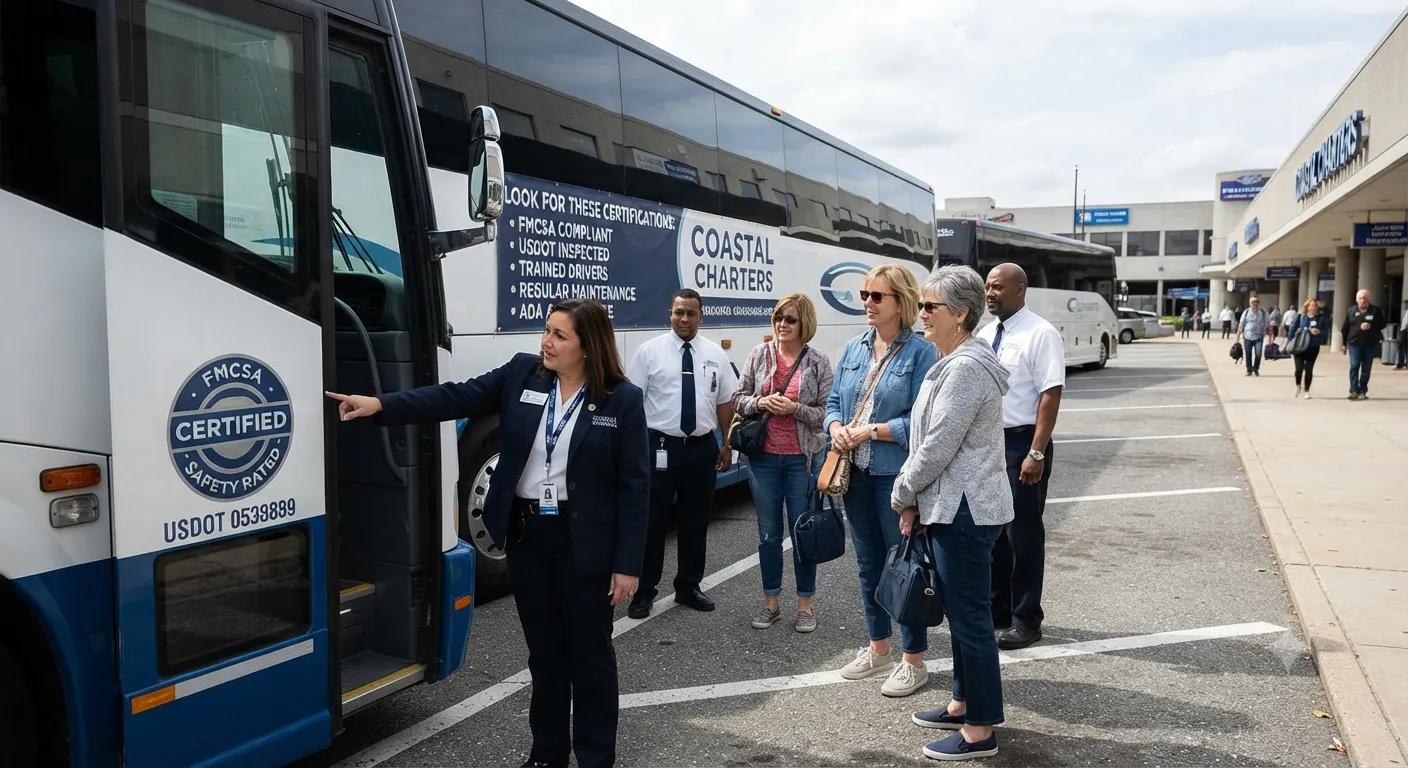
A Guide to Charter Bus Safety Certifications and Compliance
When arranging group transportation, safety should be considered just as carefully as price, vehicle size, and amenities. A professional charter bus company should meet the applicable transportation regulations and maintain the credentials required for passenger service. Understanding charter bus safety compliance can help businesses, schools, churches, sports teams, event organizers, and private groups make more informed decisions before booking. For a detailed overview of the credentials to look for, this guide to charter bus safety certifications explains the major safety and compliance areas passengers should consider.

Understanding Charter Bus Safety Compliance
Charter bus safety compliance involves more than having a clean vehicle or displaying a license on a website. Depending on the type of transportation provided, a carrier may need to comply with federal, state, and local requirements covering registration, operating authority, insurance, drivers, vehicle inspections, maintenance, and accessibility.
For interstate passenger carriers, the Federal Motor Carrier Safety Administration (FMCSA) provides registration and safety oversight. FMCSA states that commercial bus operators carrying passengers on trips that cross state lines must have a USDOT number and appropriate authorization to operate.
Because requirements can vary according to the type of operation, checking the company's credentials is an important step before signing a transportation agreement.
Checking the Company's USDOT Number
A USDOT number is one of the first credentials you can request from a charter bus company. This number identifies a motor carrier in federal transportation records and can be used to locate information about the carrier.
FMCSA provides a passenger carrier search that allows customers to search for an interstate passenger carrier by company name or USDOT number. The agency recommends checking registration and insurance information before hiring a passenger transportation company.
When reviewing the information, make sure the company name and other identifying details correspond with the transportation provider you are considering. If the information does not match, ask the company for clarification before proceeding with a booking.
Verifying Operating Authority
Operating authority is another important part of compliance for many charter bus companies. A for-hire passenger carrier operating in interstate commerce generally needs operating authority from FMCSA unless an applicable exemption applies.
FMCSA explains that an active operating authority registration must be granted before a for-hire passenger carrier can transport passengers for compensation in interstate commerce.
This requirement is particularly relevant when a charter bus trip crosses state lines. If your entire trip takes place within one state, state transportation regulations may also play an important role. Therefore, it is useful to ask which federal and state requirements apply to your particular itinerary.
Reviewing Insurance Requirements
Insurance is another significant component of charter bus compliance. Federal regulations establish minimum financial responsibility requirements for qualifying for-hire passenger carriers operating in interstate commerce.
According to current FMCSA requirements, for-hire passenger carriers using vehicles designed to transport 16 or more passengers generally need at least $5 million in public liability coverage. Vehicles designed for 15 or fewer passengers generally have a $1.5 million federal minimum, subject to applicable exceptions.
Group organizers can ask a transportation provider for proof of current insurance coverage. You can also review available insurance information through FMCSA resources. Confirming these details provides another way to verify that the carrier maintains the financial responsibility required for its operation.
Understanding FMCSA Safety Information
FMCSA provides safety information that can help passengers evaluate interstate bus operators. The agency's passenger carrier search can provide information related to authorization, financial responsibility, safety performance data, and safety ratings.
A formal safety rating is different from ongoing safety performance information. Reviewing available federal records can give customers additional context when researching a transportation provider.
It is also important to understand that an unrated carrier is not automatically the same as an unsafe carrier. FMCSA notes that an unrated status can indicate that the company has not received a formal safety rating review. For this reason, customers should consider several areas of compliance rather than relying on a single record or rating.
Verifying Driver Qualifications
The driver plays an essential role in charter bus safety. Commercial passenger drivers are subject to federal qualification requirements when operating under applicable interstate regulations.
FMCSA provides guidance covering driver qualifications for passenger motor carriers, including requirements under federal commercial motor carrier regulations. Depending on the operation and vehicle, drivers may need an appropriate commercial driver's license, passenger endorsement, medical qualification, and compliance with other applicable requirements.
When booking a charter bus, you can ask the company about its driver screening and qualification process. A transportation company may not provide private personnel records, but it should be able to explain how it verifies driver qualifications and maintains compliance.
Questions about CDL credentials, driver training, drug and alcohol testing, driving records, and hours-of-service procedures can help you understand how the company approaches driver safety.
Vehicle Inspections and Maintenance
A compliant transportation company also needs an effective vehicle inspection and maintenance program. Charter buses are commercial vehicles, so their condition must be monitored through required inspections and appropriate maintenance procedures.
Before booking, ask how frequently the company's buses are inspected and maintained. You can also ask whether the vehicle assigned to your group has undergone its required inspections and whether the company has procedures for addressing mechanical problems.
Vehicle appearance should not be the only factor you consider. A newer-looking bus is not automatically better maintained than an older vehicle. Inspection records and maintenance practices provide more useful information about the condition of a commercial passenger vehicle.
Accessibility and ADA Considerations
Accessibility is another important part of transportation planning. If your group includes passengers with disabilities or individuals who use mobility equipment, discuss accessibility requirements with the charter bus company before booking.
Depending on the service and vehicle, applicable accessibility requirements may affect vehicle selection and passenger assistance. Providing advance notice gives the transportation provider an opportunity to determine which vehicle and accommodations are appropriate for your group.
Discuss wheelchair access, boarding assistance, accessible seating, and other specific requirements during the reservation process rather than waiting until the day of travel.
State and Local Compliance
Federal regulations are important for interstate transportation, but they are not necessarily the only requirements that apply. Charter bus companies may also need to follow state and local transportation regulations depending on where they operate.
State requirements can address areas such as permits, vehicle inspections, insurance, registration, and passenger transportation operations. If your itinerary involves multiple states, ask the company whether it maintains the required credentials for the locations included in your trip.
This is especially useful when planning long-distance group transportation where the bus will travel across several jurisdictions.
Why Compliance Matters Before Booking
Safety certifications and compliance requirements are designed to establish standards for commercial passenger transportation. They can help provide a framework for driver qualifications, vehicle condition, insurance coverage, and lawful operation.
However, compliance should not be treated as a single certificate that automatically proves everything about a transportation company. Instead, customers should look at multiple areas of the carrier's operation and verify information through reliable sources whenever possible.
FMCSA specifically provides passengers with tools to research interstate passenger carriers before hiring them. Its passenger carrier search allows customers to review registration and safety information, while insurance information can also be accessed through the agency's systems.
Making Safety a Priority When Choosing a Charter Bus
Whether you are arranging transportation for a corporate meeting, school excursion, church trip, wedding, sporting event, airport transfer, or private group outing, safety compliance should be part of the booking process.
Start by requesting the company's USDOT number when applicable, reviewing its operating authority, checking insurance information, and asking about driver qualifications and vehicle maintenance. If your group has accessibility requirements, communicate them early so the appropriate transportation arrangements can be made.
Taking time to verify these details can make the booking process more transparent and help you understand the transportation provider before your group gets on the road. A company that can clearly explain its safety credentials and compliance practices gives organizers useful information for planning transportation responsibly.