

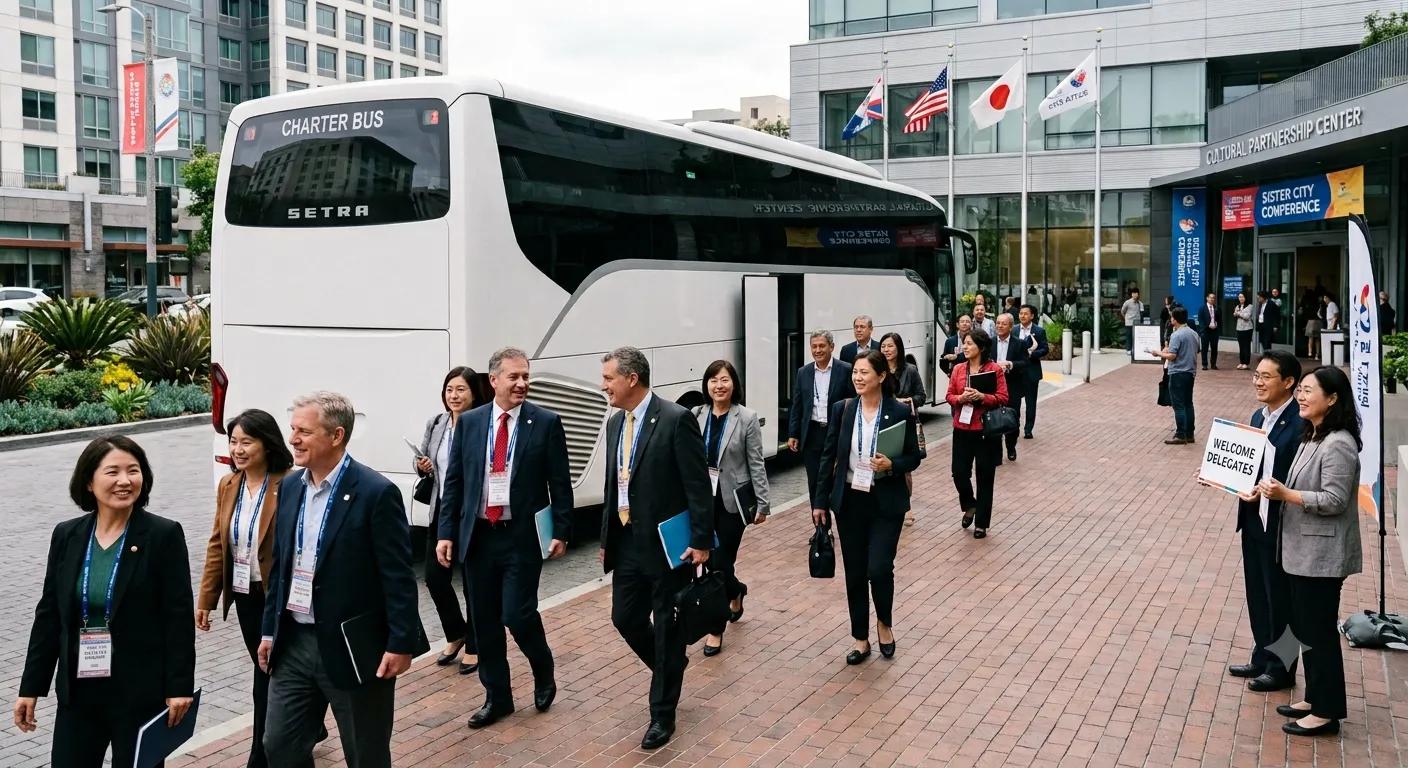
A Complete Guide to Sister City Delegation Transportation
Sister city partnerships encourage cultural understanding, international cooperation, educational exchange, and economic development between communities. These programs often bring together government officials, educators, students, business representatives, and cultural organizations for a series of meetings and activities. To make each visit successful, organizers must coordinate schedules, accommodations, and transportation carefully. Arranging reliable transportation services for sister city delegations can simplify travel between airports, hotels, conference venues, government offices, and cultural attractions while helping international visitors feel welcome.

Transportation planning is especially important when a delegation has a busy itinerary or includes participants unfamiliar with the host city. A well-organized travel plan reduces confusion, supports punctuality, and allows guests to concentrate on the purpose of their visit. With advance preparation and a suitable charter bus, organizers can manage group movements more efficiently and create a positive experience for everyone involved.
Understanding the Unique Needs of Sister City Delegations
Every sister city delegation has different transportation requirements. A group visiting for diplomatic discussions may need transfers between municipal buildings and conference centers, while an educational delegation may spend more time visiting schools, universities, and community institutions. Cultural exchange programs may include performances, museum visits, historical tours, and public celebrations.
Organizers should begin by identifying the delegation's size, visit duration, primary activities, and transportation requirements. They should also determine whether everyone will travel together or whether smaller groups will need separate arrangements for certain activities.
Understanding these details early makes it easier to choose the right vehicle and develop a practical schedule. It also helps transportation providers estimate travel time, identify potential access restrictions, and prepare an accurate quotation based on the planned itinerary.
Creating a Detailed Transportation Itinerary
A comprehensive itinerary is the foundation of effective delegation transportation. It should identify each destination, planned departure time, expected arrival time, passenger pickup point, and the coordinator responsible for communication.
Airport arrivals, hotel transfers, official ceremonies, business meetings, and evening receptions should all be included in the master schedule. Organizers should confirm venue addresses and identify suitable bus loading areas before finalizing travel arrangements.
Travel times should account for traffic, parking, passenger boarding, and security procedures at official buildings. Leaving a reasonable buffer between appointments helps prevent a minor delay from affecting the remainder of the day's activities.
The itinerary should also remain flexible enough to accommodate unexpected changes. If a meeting runs longer than anticipated or a cultural activity requires additional time, organizers should have a clear process for updating the transportation provider and informing participants.
Coordinating Airport Transfers and Accommodation
Airport transfers are often the first transportation service international visitors experience upon arrival. A smooth arrival process helps establish a positive impression and reduces stress for guests who may be tired after a long journey.
Organizers should collect flight information, arrival times, passenger numbers, and luggage requirements before arranging pickups. When several visitors arrive around the same time, shared transportation may provide an efficient option. When flights are spread across different periods, separate transfers may be more practical.
A designated meeting point and clear arrival instructions help participants locate their transportation without confusion. Organizers should also provide a contact number for the person coordinating arrivals in case a flight is delayed or a passenger cannot find the pickup location.
Hotel transportation requires similar attention. Establishing consistent pickup times and clearly communicating departure arrangements helps guests reach their appointments without needing to navigate unfamiliar streets or arrange individual rides.
Choosing the Appropriate Charter Bus
The right vehicle depends on the number of passengers, luggage volume, itinerary, and comfort requirements. A minibus may be suitable for a small delegation attending several meetings across the city, while a full-size charter bus may be more appropriate for a larger group attending ceremonies, conferences, or cultural events.
Organizers should confirm passenger capacity and luggage space before booking. International visitors may carry large suitcases, presentation materials, gifts, or equipment for cultural performances, so the total storage requirement matters as much as the number of seats.
Vehicle amenities can also influence the travel experience. Depending on the selected bus, available features may include climate control, reclining seats, overhead storage, and dedicated luggage compartments. These features should be confirmed directly with the provider.
Accessibility must be considered as well. If any participants require accessible boarding or additional mobility accommodations, organizers should communicate those needs during the booking process. Early confirmation helps ensure the selected vehicle is appropriate for the entire delegation.
Managing Transportation for Official Meetings and Cultural Tours
Sister city visits often combine formal meetings with opportunities to experience the host community. Participants may attend municipal briefings, visit local businesses, tour universities, explore historical landmarks, or participate in community celebrations.
Coordinated group transportation helps connect these activities without requiring every participant to arrange separate travel. It also makes passenger counts and departure times easier to manage, particularly when the group moves between several destinations during one day.
Route planning should consider the locations and operating hours of all scheduled venues. Busy downtown areas may have restricted bus access, while historic districts may offer limited parking or designated passenger drop-off zones. Confirming these details in advance reduces the likelihood of unexpected detours.
Organizers should also avoid overcrowding the itinerary. Allowing sufficient time at each destination creates a more enjoyable experience and gives participants opportunities to interact with local hosts, ask questions, and build professional or cultural relationships.
Establishing a Realistic Transportation Budget
Transportation costs can vary depending on the vehicle, distance, service duration, number of stops, and additional expenses. Creating a realistic budget early helps organizers allocate funding appropriately and avoid unexpected charges.
When requesting quotations, provide the transportation company with the complete itinerary, estimated passenger count, travel dates, and expected operating hours. Ask whether the quotation includes mileage, driver time, tolls, parking fees, waiting time, and any other applicable costs.
Comparing quotations based on the same travel requirements makes it easier to evaluate overall value. The lowest initial price may not represent the best option if the vehicle is unsuitable or the service terms do not accommodate the delegation's schedule.
Organizers can also manage costs by combining compatible journeys and avoiding unnecessary trips. For example, participants staying at the same hotel and attending the same conference may be able to share scheduled transfers. However, cost-saving decisions should never compromise passenger capacity, accessibility, or the group's essential timing requirements.