

charter bus rentals
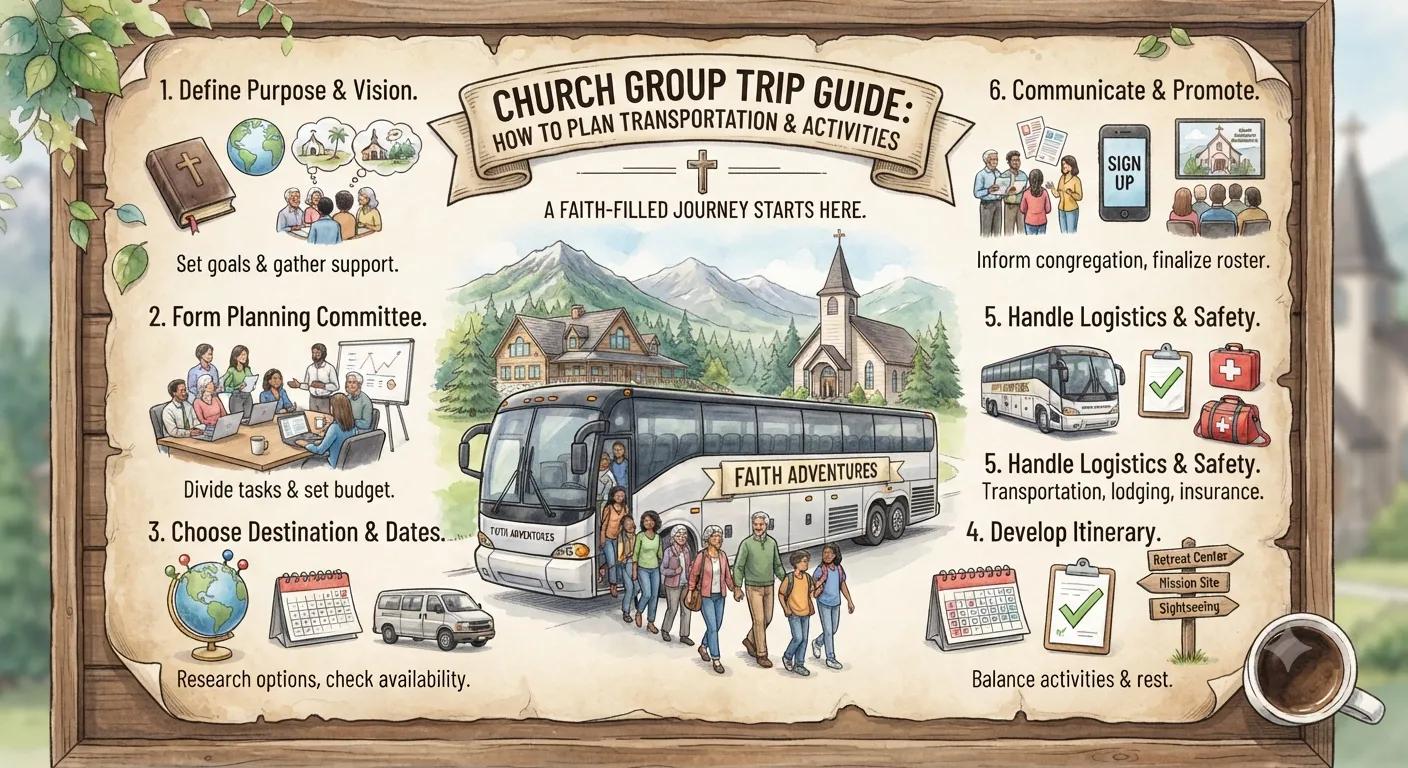
Planning a church group trip can be an exciting opportunity to bring members together for fellowship, worship, service, education, and shared experiences. Whether you are organizing a youth retreat, mission trip, religious conference, choir tour, or family outing, transportation and activities need to be carefully coordinated. A clear plan can help organizers reduce stress, manage schedules, and create a more enjoyable experience for everyone. This Church group trip guide explains how to plan transportation and activities effectively.

Start With a Clear Church Trip Plan
Before arranging transportation or activities, determine the purpose of the trip. Knowing your group's goals will help you select a destination and create a schedule that suits your participants.
Choose the Destination and Dates
Consider the group's age range, interests, budget, travel distance, and accessibility needs when selecting a destination. Religious conferences, retreat centers, historic churches, museums, outdoor attractions, and community service locations can all provide meaningful group experiences.
Check the availability of your preferred destination before finalizing travel dates. Planning several months ahead can give you more flexibility with transportation, accommodations, and activities.
Create a Realistic Travel Budget
A detailed budget is essential for successful church group travel planning. Estimate the costs of transportation, lodging, meals, admission fees, parking, activities, and unexpected expenses.
Communicate Costs With Participants
If participants are contributing toward the trip, provide clear information about the expected cost and payment deadlines. Explain which expenses are included and which may be paid separately.
Planning the transportation budget early can help you compare options and select an arrangement that provides comfort and convenience without creating unnecessary financial pressure.
Choose Transportation That Fits Your Group
Transportation is one of the biggest considerations when planning a church group trip. If participants travel separately, organizers may need to coordinate multiple drivers, departure times, parking locations, and routes.
Consider a Charter Bus for Church Groups
A charter bus for church groups can make group transportation simpler by keeping everyone together. Instead of relying on several personal vehicles, participants can travel from a central pickup location and follow one itinerary.
Depending on the vehicle, a charter bus may offer reclining seats, climate control, overhead storage, luggage compartments, Wi-Fi, entertainment systems, and restrooms. Amenities vary by bus, so ask the transportation provider which features are available before booking.
When requesting a church group charter bus quote, provide the passenger count, travel dates, pickup location, destinations, planned stops, and approximate driving hours.
Plan Activities Around Your Group
The activities you select should match the purpose and interests of your church group. Avoid creating an itinerary that is so crowded that participants have no time to relax or socialize.
Include Meaningful Group Activities
Depending on the purpose of your trip, activities could include worship services, volunteer projects, Bible study sessions, historical tours, cultural attractions, outdoor recreation, group meals, or fellowship events.
Balance scheduled activities with free time. Participants may appreciate having opportunities to relax, talk with other members, or enjoy the destination at their own pace.
Build a Detailed Itinerary
Once your activities are selected, organize them into a practical schedule. Include departure times, transportation details, activity locations, meal times, rest breaks, and accommodations.
Leave Buffer Time Between Activities
Large groups often need additional time to board transportation and gather before moving to the next destination. Traffic, weather, parking, meals, and restroom breaks can also affect your schedule.
Adding extra time between activities gives the group flexibility and reduces the pressure of trying to stay exactly on schedule.
Plan Meals and Rest Stops
Food is an important part of any group trip. Research restaurants that can accommodate your group size and schedule.
Reserve Group-Friendly Dining Locations
Contact restaurants in advance to ask about reservations, group seating, menus, and service times. Advance planning can help avoid long waits when traveling with a large congregation.
For longer journeys, schedule regular rest stops. Passengers should have enough time to use restrooms, stretch, purchase refreshments, and return to the bus.
Consider Passenger Needs
A successful church group trip should accommodate the needs of different travelers. Your group may include children, teenagers, older adults, families, or passengers with mobility considerations.
Plan for Accessibility and Comfort
Ask participants to communicate relevant accessibility requirements during registration. Discuss these needs with transportation providers, hotels, activity venues, and restaurants before the trip.
Choosing suitable facilities in advance can help everyone participate more comfortably.
Prioritize Safety During Activities
Safety should be considered when selecting and scheduling activities. Make sure organizers understand the rules and requirements of each venue before arrival.
Establish an Emergency Communication Plan
Designate several group leaders who can communicate with participants if plans change. A group messaging system can help organizers quickly share information about meeting points, weather conditions, schedule changes, or emergencies.
For youth trips, churches should follow their established policies regarding chaperones, supervision, parental permissions, and emergency procedures.
Communicate the Itinerary Before Departure
Send participants important trip information before travel day. Include the pickup location, departure time, itinerary, accommodation details, meal arrangements, luggage expectations, activity information, and emergency contact details.
Hold a Pre-Trip Meeting
A short meeting can help travelers understand what to expect. Review transportation procedures, activity schedules, meeting points, group responsibilities, and safety information.
Encourage everyone to arrive early on departure day. Prompt boarding can help keep the entire itinerary on schedule.
Make Transportation Part of the Experience
Traveling together can provide valuable opportunities for fellowship. Passengers can socialize, relax, listen to music, participate in appropriate group activities, or prepare for upcoming events.
A church group charter bus keeps participants together rather than dividing them among several cars. This can make communication easier and allow members to enjoy the journey as a group while a professional driver focuses on the road.
Review the Trip After Returning
Once the trip is over, gather feedback from participants and organizers. Ask about transportation, activities, meals, accommodations, scheduling, and communication.
Improve Future Church Trips
Keep notes about successful activities, transportation arrangements, restaurants, hotels, and destinations. These records can make future church group travel planning more efficient.
Feedback can also help organizers identify areas where schedules, communication, comfort, or safety procedures could be improved.
Plan a Successful Church Group Journey
A successful church group trip requires more than choosing activities. Organizers need to coordinate transportation, schedules, meals, accommodations, safety procedures, and participant needs.
By planning transportation early, creating a flexible itinerary, selecting meaningful activities, and communicating clearly with travelers, churches can create a smoother experience for everyone. For larger groups, Charter bus rentals for church groups can simplify transportation by keeping participants together and reducing the challenges of coordinating multiple vehicles.
With thoughtful preparation and dependable transportation, your church can focus on fellowship, worship, service, and creating memorable experiences throughout the journey.